
· by Michael Blair, Nashville's Foundation Repair
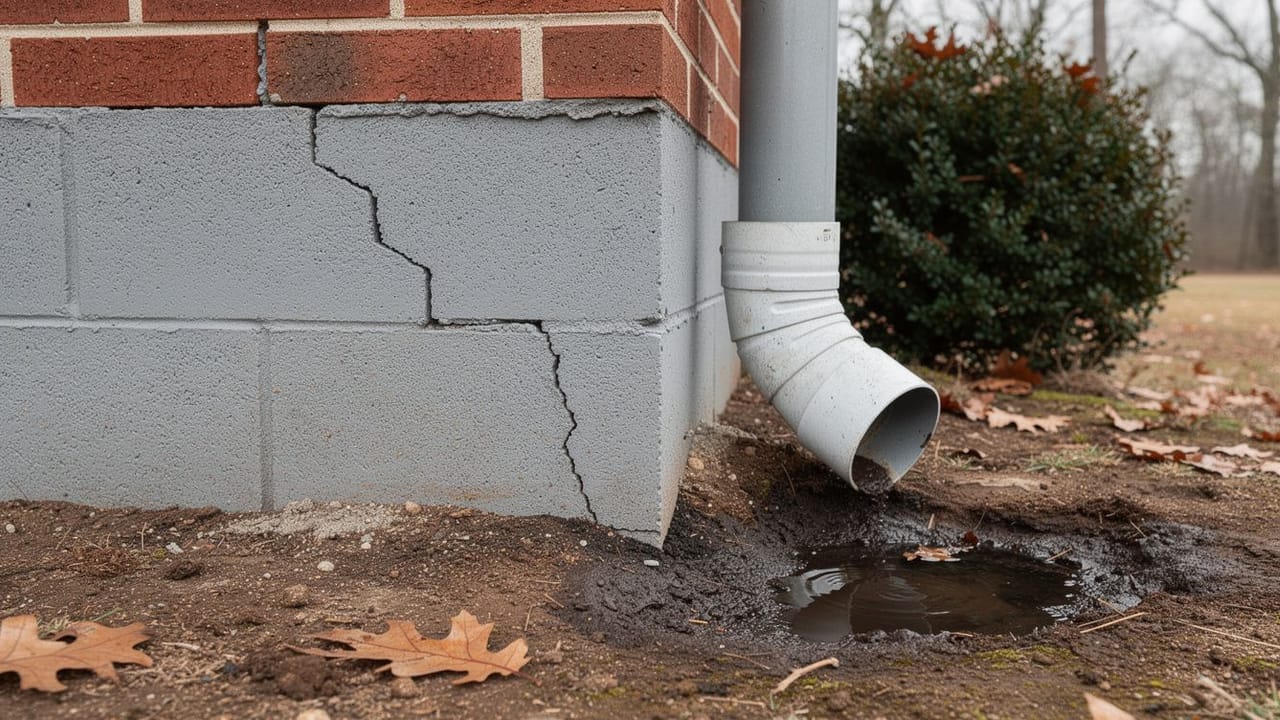
When a stair-step crack shows up in a block wall, the first call often goes to the insurer, and the answer is usually no. That is rarely an adjuster being difficult. Most policies do not cover earth movement, according to the Texas Department of Insurance’s home insurance guide, and the slow movement we are called out to look at falls squarely on that side of the line.
What the exclusion actually says
The Texas guide sets out a table of what most policies cover and what they don’t. Earthquakes or earth movement sit on the excluded side, alongside a continuous water leak and wear and tear. It is written by another state’s regulator, so read it as how standard policies tend to be worded, not as your contract. Whether your own policy names settling, shrinking soil or subsidence is on the page in front of you, and the Tennessee Department of Commerce and Insurance tells consumers to read their policies and to put questions to their agent, their broker or the department when the wording is unclear. Flood is a separate gap: the department’s homeowners insurance page says flood damage is not included in a homeowner’s policy and points to the National Flood Insurance Program for that cover.
Put those together and the gradual failure we see most often is excluded twice over, once as earth movement and once as wear. Soil that gains and loses moisture through the seasons moves a house a little at a time, which our post on what Middle Tennessee clay does to a foundation walks through. Limestone is the other local story. The U.S. Geological Survey’s page on sinkholes says they are common where groundwater dissolves limestone and similar rock, and it lists Tennessee among the states where sinkholes tend to do the most damage. How a collapse is treated under your policy comes down, again, to its wording.
When does insurance pay for foundation damage?
Sudden and accidental is the dividing line. The Texas guide puts sudden and accidental release of water, explosion, and aircraft and vehicles among the risks most policies cover, and a continuous water leak among the ones they do not. A supply line under the slab that bursts is therefore a different claim from one that has dripped for months, even when the soil underneath ends up in the same state.
What gets paid after a covered burst is its own question. The same guide lists damage to foundations or slabs among the endorsements companies sell as add-ons, so don’t assume the base policy pays for foundation work that follows a leak. Where a slab may have been lifted by water, we test the plumbing before quoting any repair, for the reasons laid out in our post on slab settlement in Nashville homes.
- Sudden and accidental release of water: covered by most policies
- A continuous leak over months: not covered by most
- Explosion, aircraft and vehicles: covered by most
- Earthquakes or earth movement: excluded by most
- Wear and tear: excluded by most
- Flood: not part of a Tennessee homeowner’s policy
What should you do instead of filing a claim?
Establish the cause before spending anything. A structural engineer working for you rather than for a repair company can tell you whether the movement is active, what is driving it and what the remedy is. That report also gives every contractor the same specification to price, including us when the answer is piers and our pier and settlement repair work is on the list.
Then look at the water around the house, which is where we start on most jobs. Gutters that discharge well away from the walls, grading that falls away from the house rather than toward it, and a crawl space that stays dry are the work on our drainage and grading page, and none of it needs a claim number.
The disclosure and resale side
What you must tell a buyer about a past foundation repair is a legal question for your real estate agent or attorney, not for us. Whatever they tell you, keep the engineering report, the permit if one was required, the scope of work and the warranty in one folder. A buyer’s inspector will look at the foundation either way, and our post on checking a foundation before you buy is the other side of that same conversation.
There is an insurance reason too. The Texas guide says a company may decline to renew a policy when a house is in bad condition, or require repairs before renewing it. Tennessee carriers may handle that differently, but it argues against the cheapest available fix. A transferable warranty is only worth something if the company that issued it is still in business to honor it, and closing day is when someone checks. If you want us to look at the house itself, ask for a free estimate.
Sources
- Texas Department of Insurance, Home insurance guide — Most policies exclude earth movement, a continuous water leak and wear and tear; cover sudden and accidental release of water, explosion, aircraft and vehicles; foundation or slab and earthquake endorsements; nonrenewal for a house in bad condition
- Tennessee Department of Commerce and Insurance, Actual Cash Value v. Replacement Cost — Consumers should read their policies and ask agents, brokers or TDCI when the wording is unclear
- Tennessee Department of Commerce and Insurance, Homeowners Insurance Information — Flood damage is not included in a homeowner’s policy; flood cover through the NFIP
- U.S. Geological Survey, Sinkholes — Sinkholes are common where groundwater dissolves limestone; Tennessee among the states with the most sinkhole damage
FAQ
Why Insurance Will Not Pay for Foundation Movement — questions
Is there insurance that covers foundation settling?
Not through a standard homeowner policy, as a rule. The Texas Department of Insurance lists damage to foundations or slabs, and damage from earthquakes, among the endorsements companies commonly sell as add-ons, so ask your agent whether a carrier here offers one and exactly what it pays for. Settling from ordinary soil movement tends to fall under the earth movement and wear and tear exclusions.
What if a plumbing leak caused my foundation damage?
Then the adjuster will focus on sudden versus gradual. Most policies cover a sudden and accidental release of water and exclude a continuous leak, so a pipe that burst is a different claim from one that had been seeping for a year. Whether the policy also pays to open the slab and reach the leak, or for the foundation work afterward, depends on its wording, so ask your agent before the work starts.
Should I get an engineer or a foundation company first?
An independent structural engineer, because they have nothing to sell you. A free inspection from any repair company, ours included, comes from someone who also sells the repair, and it is worth reading with that in mind. The engineer’s report gives you a specification to get comparable bids against.
Does homeowners insurance cover water damage to a foundation?
Only some of it. Most policies cover a sudden and accidental release of water and exclude a continuous leak, so a burst pipe and a months-long drip are treated differently. Flood damage is not included in a Tennessee homeowner’s policy at all; the state’s insurance department points to the National Flood Insurance Program for that cover.