
· by Michael Blair, Nashville's Foundation Repair
Sticking doors are the symptom people notice first and the one with the most innocent explanations. Humid air is a common one, and the way a door behaves over a full year goes a long way toward separating a swollen door from a house that is moving.
Why do doors stick in summer?
Wood takes on moisture from the air around it. The U.S. Forest Service’s Wood Handbook chapter on moisture relations explains that it expands as it picks up moisture and contracts as it dries, following both seasonal and daily swings in humidity. A door that binds from June to September and works fine in winter is most likely doing exactly that. Paint and varnish slow the exchange, the handbook adds, but they do not prevent it.
The tell we look for is a door that frees up again once the air dries out. That pattern sends us to humidity first, though it does not settle the question by itself, since the ground under a house can move with the weather too, as we cover in our post about clay soil under local houses. A door that never frees up, or binds a little worse each year, is the one we would want to see.
When does a sticking door point to the foundation?
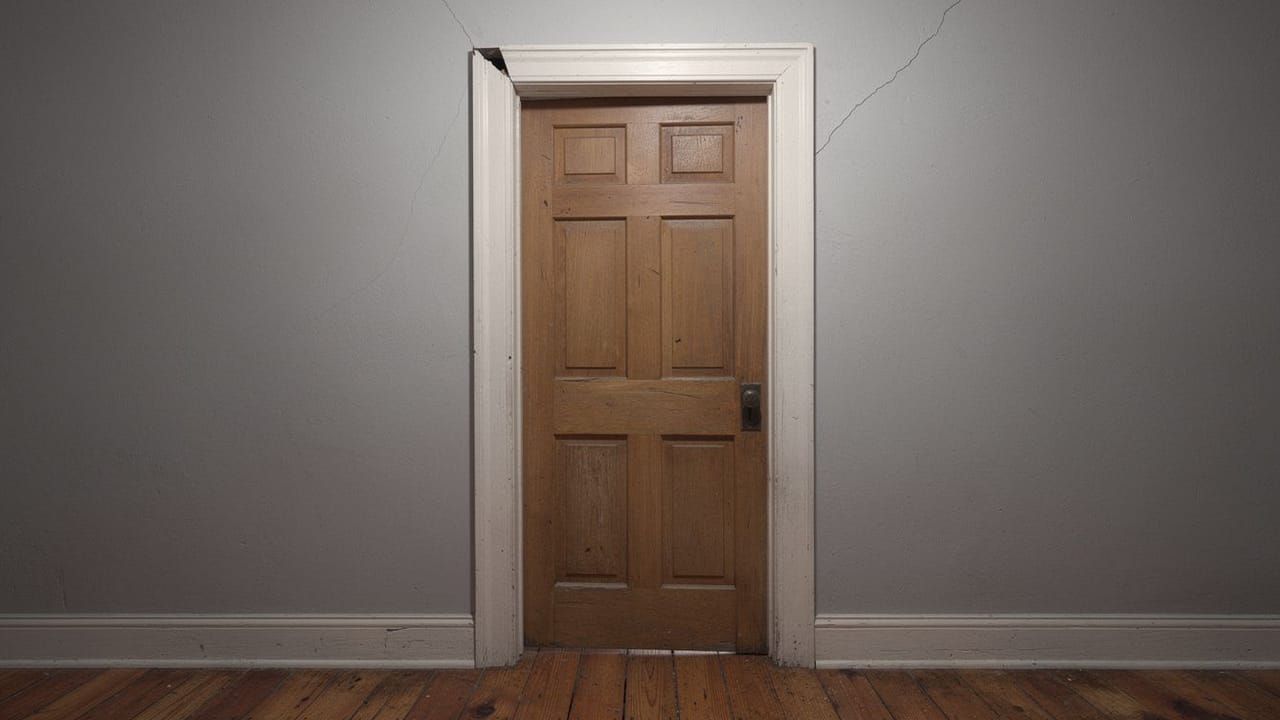
The signs we take more seriously are binding that lasts all year or gets worse each year, a door that used to close cleanly and now sits visibly out of square in its frame, and a gap opening at one top corner of the frame while the other corner stays tight.
None of those proves a foundation problem on its own. The same Forest Service handbook notes that shrinking and swelling can warp wood, so a door or a run of trim can go out of true from moisture alone. What changes our view is several signs turning up together in one part of the house: cracks at window corners, floors that slope, or gaps opening between trim and wall. That combination is what we want to understand before anyone talks about foundation repair.
- Sticks only in summer: likely humidity
- Sticks all year and worse each year: worth investigating
- Gap at one top corner of the frame: the opening may be racking
- Comes with floor slope or drywall cracks: worth investigating
- Confined to one area of the house: can point to movement under that area
Checking it yourself
A marble on the floor and a level tell you a lot. Consistent slope across a room, particularly toward one corner, is worth writing down along with the date and the spots where you measured.
Photograph and date any drywall crack that runs out from the corner of a door or window opening, since those corners are where we look first. A crack that keeps lengthening over the following months says far more than one somebody happened to notice, and we explain how to keep a dated, month-by-month record of a crack in a separate post. If the readings worry you, an inspection with measured floor levels puts numbers on what the marble suggested.
Crawl space causes
When a house has a crawl space, we check the framing down there before we look at the foundation walls. We are looking for a settled or failed support post, a rotted girder and joists damaged by moisture, any of which can let part of a floor sag while the walls stay put.
Two of those three come down to water. The EPA’s mold course chapter on mold basics describes humid crawl spaces as a common place for mold to grow out of sight, especially where the floor is bare earth that wicks moisture up from the soil, and warns that a moisture problem left unaddressed long enough is likely to cause structural damage. A damp crawl is worth dealing with before the framing gets worse. If you are not sure what is going on under your floor, ask us to take a look.
Sources
- USDA Forest Service, Forest Products Laboratory, Wood Handbook ch. 4, Moisture Relations and Physical Properties of Wood (FPL-GTR-190, 2010) — Wood takes on moisture from the air, swells and shrinks with seasonal and daily humidity changes; coatings slow but do not prevent it; shrinking and swelling can cause warping
- U.S. Environmental Protection Agency, Mold Course Chapter 2: Mold Basics — Humid crawl spaces are common sites of hidden mold; bare soil wicks moisture; unaddressed moisture is likely to cause structural damage and can weaken floors
FAQ
When Sticking Doors Mean a Foundation Problem — questions
Do sticking doors always mean foundation problems?
No. Wood takes on moisture from humid air and swells, so plenty of doors bind in summer and free up again as the air dries. What makes us want a closer look is binding that lasts all year, gets worse each year, or shows up alongside sloping floors and cracks at window corners.
How can I tell if my floor is sloping?
A long level, or a marble rolled on the floor in several spots. One reading tells you less than you might think. What matters is whether the slope is increasing, so measure in the same places, write down the date and check again later rather than relying on impression.
Could my crawl space be the cause?
It can be, and we check it before the foundation walls. A settled or rotted support post, a sagging girder or moisture-damaged joists can let a floor move and doors bind while the walls are sound. Crawl spaces with damp air and a bare dirt floor are prone to hidden moisture problems, and wet framing left that way long enough can be weakened.
What causes doors to stick?
Usually humid air. Wood takes on moisture and swells, so a door that binds in summer and works fine in winter is most likely doing just that, and paint only slows the exchange. Less often the house is moving, which shows as a door out of square, a gap at one top corner of the frame, or binding all year.