
· by Michael Blair, Nashville's Foundation Repair
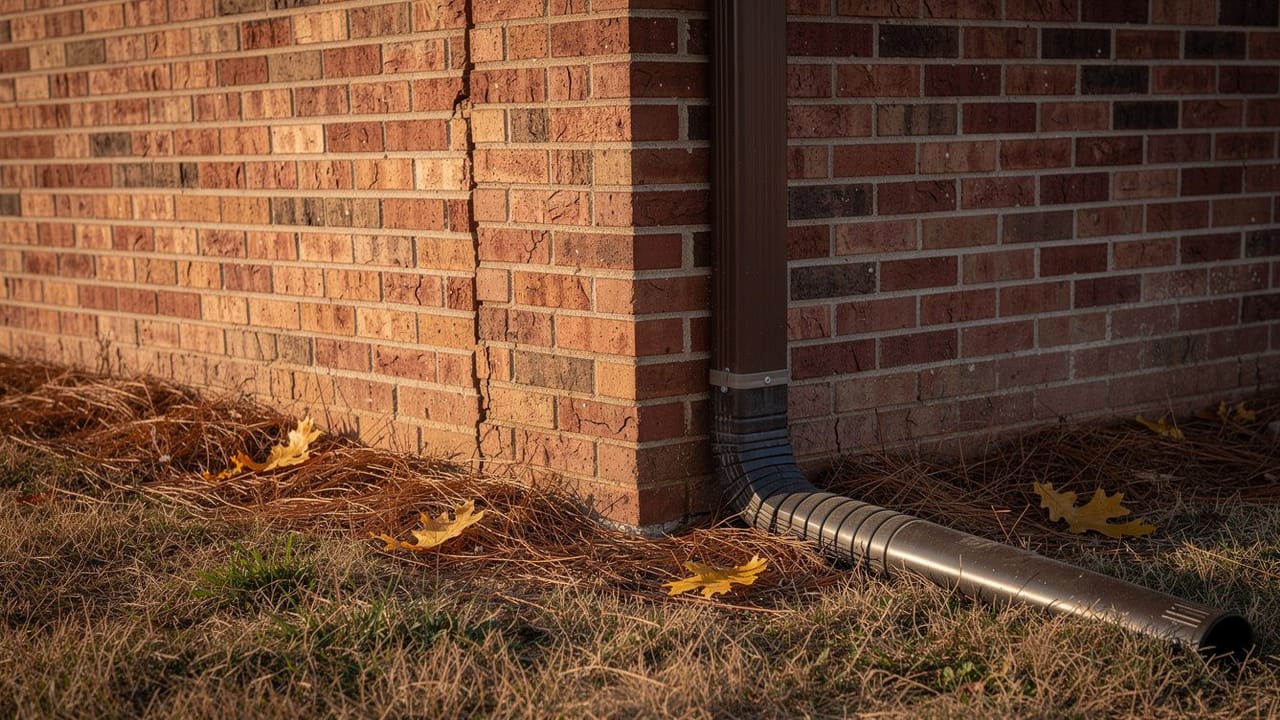
Most people notice a foundation crack once, worry about it, and then have no idea months later whether it has changed. That is the real difficulty. Clay soil can shrink as it dries and swell as it takes up water, and the U.S. Geological Survey has mapped where swelling clays occur across the lower 48 states in its Swelling Clays Map of the Conterminous United States. A house resting on soil like that can move a little with the weather, so a crack that opens in a dry spell and narrows after a wet one may be doing nothing more than breathing. A crack that grows a little more every year is a different matter. The only way to tell them apart is a record, and if you start one this fall, by spring you will have readings from two quite different seasons to set side by side.
Why one look is not enough
The house rides on the ground around and under it. If that ground is clay and it dries out, it can shrink, and cracks in brick, block and drywall may open slightly. When the soil takes up water again, a crack that opened for that reason may close part of the way. If you want to know what your lot sits on, the Tennessee Geological Survey publishes maps of the state’s geology and studies its geologic hazards, though your own walls will answer the narrower question sooner.
We read a crack that cycles like that as a moisture question, and the answer usually starts with water management around the house. A crack that opens and does not close again, or comes back wider each year, we read as the structure moving in one direction. Both can look identical on the day you first see them. Direction and width are covered in our post on which foundation cracks actually matter; this one is about change over time.
What should you record about a foundation crack?
Record measurements you can repeat exactly: the crack’s length and width, the doors that stick, any floor slope and the weather. Pick each crack worth watching, inside and out, and give it a name in a notebook or a note on your phone. Then set up the same few checks for each one, and write the date on everything.
A plastic crack monitor, sometimes called a tell-tale, is what we reach for here. It fixes across the crack with one half on each side, and the way the two halves sit against each other shows whether the crack has opened or slid. On drywall, a pencil mark at each end of the crack with the date written beside it shows whether it is getting longer.
- Pencil the ends of each crack and date the marks
- Fix a crack monitor across the widest point, or photograph it beside a ruler from the same spot
- Note which doors and windows stick or will not latch, and on which side
- Check a long level on floors that seem to slope, and mark where the bubble sits
- Write down the weather: a dry month, a wet week, a hard freeze
How often should you check a foundation crack?
We suggest checking every crack once a month, and again after any unusually wet or dry stretch, then laying the spring readings beside the ones you took in the fall. If the cracks have narrowed and the stuck doors have freed themselves, we treat the movement as seasonal. That sends us to the water around the house before anything else: the gutters, the downspout extensions and the grade, which is the work of our drainage and grading service.
If a crack has grown past its pencil mark, or the monitor shows it wider in spring than it was in the fall, that is movement we would want to look at. So is sliding or offset movement, where one side of the crack has shifted past the other, even if the width has barely changed. A dated record like this is what we hope to be handed when we come out for an inspection, and a structural engineer will want it too.
When not to wait for spring
A monitoring year only makes sense for cracks that are behaving like cracks. Some conditions we would rather see now: a basement or block wall with a horizontal crack and a visible lean, water coming through a crack, a door that suddenly will not close when it closed fine last week, or brick pulling away from a window frame. A wall that leans or bows is the job described on our wall repair page.
When we inspect, one of the first things we ask is whether anyone has been watching the crack, and six months of dated marks takes most of the guessing out of that visit. The record can help at sale too. A buyer’s inspector who finds a patched crack may ask what it has done since, and a notebook answers that better than anyone’s memory. If your readings worry you, ask us to come and look and have the notebook handy. Whoever does the repair, the Tennessee Board for Licensing Contractors, which licenses general and home improvement contractors in the state, lets you verify their license online before you sign anything.
Sources
- U.S. Geological Survey, Swelling Clays Map of the Conterminous United States (Map I-1940, 1989) — Swelling clays mapped across the lower 48 states; supports that clay soils can shrink and swell with moisture
- Tennessee Department of Environment and Conservation, Tennessee Geological Survey — Maps the state’s geology, researches geologic hazards and publishes maps for the public
- Tennessee Department of Commerce and Insurance, Board for Licensing Contractors — Licenses general contractors and home improvement contractors; online license verification
FAQ
How to Track a Foundation Crack Through the Year — questions
How can I tell if a foundation crack is getting worse?
Mark the ends with a dated pencil line and fix a crack monitor across it, or take photos beside a ruler from the same spot, then check monthly. A crack that grows past its marks, or is wider in spring than it was in the fall, is one we would want to inspect.
Is it normal for foundation cracks to open and close?
It can be. Clay soil can shrink as it dries and swell as it wets, so a crack may widen in a dry spell and narrow again after a wet one. We read steady seasonal cycling as a reason to look at drainage around the house first, and a crack that only ever widens as the one we would want to see.
Should I fill a foundation crack before monitoring it?
We would hold off. Filling it hides the movement you are trying to measure. Keep the record through a dry stretch and a wet one, then seal it once you know whether it is stable or needs repair.
What is a foundation crack monitor?
A crack monitor, also called a tell-tale, is a plastic gauge fixed across a crack with one half on each side of it. How the two halves sit shows whether the crack has opened or slid since it went on. Read it once a month and after any unusually wet or dry stretch, writing down the date each time.