
· by Michael Blair, Nashville's Foundation Repair
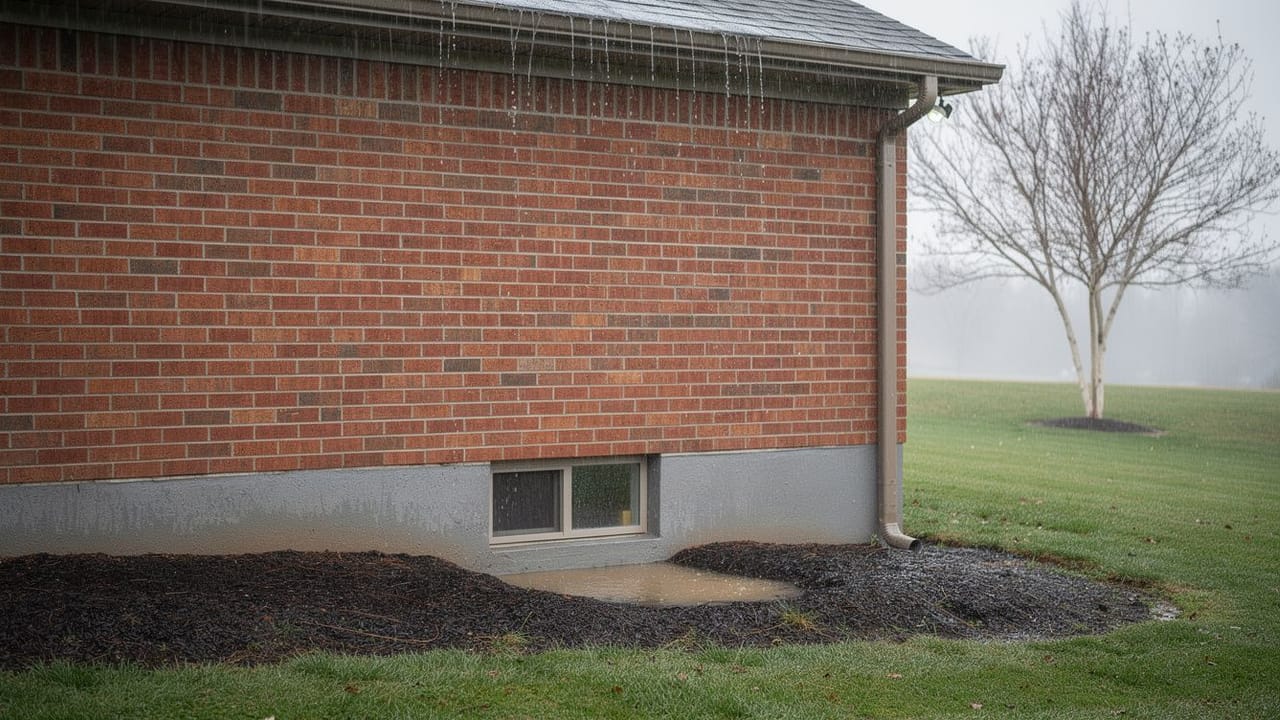
Roof and surface water collecting against the foundation is a common cause of a wet basement: the EPA’s course on mold prevention and moisture control lists landscaping, gutters and downspouts that direct water into or under a building among the usual moisture problems. Interior systems handle water that is already inside. We start outside, at the drainage and grading, and decide on anything inside after that.
Start outside, always
Outside means three things: gutters that are clear and big enough for the roof, downspouts that let go well away from the wall, and ground that falls away from the house. The EPA’s brief guide to mold and moisture in the home puts two of them plainly, telling owners to clean and repair roof gutters regularly and to make sure the ground slopes away from the foundation so water does not enter or collect around it. Until that is done, nobody can say how much water an interior system would really have to handle.
That is why, in our view, a contractor who quotes an interior system without asking about your gutters and grade has skipped a step, and getting a second opinion is reasonable.
What does the spot where water enters tell you?
Where the water shows up tells us where to look. A wet line where the wall meets the floor sends us to the soil and drainage around the footing. Water at one crack sends us to that crack. Water coming in over the top of the foundation sends us to the grade and the gutter right outside that spot.
Your own look during a storm is free and worth more than a description afterward. Go down with a flashlight while it is raining hard, see where the water appears and how fast it comes, and take a photo or two. If the wall is bowing as well as leaking, our post on bowing basement walls covers that side of it.
- Gutters, downspouts and grading first
- Note where water appears during actual rain
- Water at the floor line: we check drainage at the footing
- Water at one crack: we scope that crack
- Water over the top: we check the grade at that spot
Interior versus exterior systems
An interior system is a drain laid along the inside of the footing that carries water to a sump pit, where a pump sends it out of the house. Installing one means cutting out a strip of the basement floor around the edge, with no digging in the yard.
Exterior waterproofing means excavating down the outside of the wall and treating it from that side, so water is dealt with before it reaches the block or concrete. It is the bigger dig, and the beds, steps and anything else against that wall are disturbed. We choose between the two once the outside drainage is right and we have seen what still gets in; both are described on our basement waterproofing page.
Why does a sump pump need backup power?
A sump pump does nothing without power, and the hard rain that fills the pit can arrive with the same storm that knocks the power out. Among its steps to take before a flood, Ready.gov’s flood page says to install check valves and to consider a sump pump with a battery, and its power outage guidance is to plan for batteries and other alternative power sources for when the power goes out.
We would also rather you test the pump a few times a year, pouring a bucket of water into the pit and watching it switch on and empty, than find out mid-storm that it has seized. If water does get in, dry it quickly: the same EPA guide says that when wet or damp materials are dried within 24 to 48 hours of a leak, in most cases mold will not grow. If your basement is taking water now, ask us for a free estimate and bring the photos from the last storm.
Sources
- U.S. EPA, Mold Course Chapter 2: Mold Prevention and Moisture Control — Landscaping, gutters and downspouts that direct water into or under a building are common moisture problems
- U.S. EPA, A Brief Guide to Mold, Moisture, and Your Home — Clean and repair gutters; ground should slope away from the foundation; materials dried within 24 to 48 hours usually do not grow mold
- Ready.gov (FEMA), Floods — Install check valves; consider a sump pump with a battery
- Ready.gov (FEMA), Power Outages — Plan for batteries and other alternative power sources for outages
FAQ
Water in a Nashville Basement: Fix Outside First — questions
Why does my basement only leak in heavy rain?
Heavy rain is when the most roof and yard water reaches the foundation, so a drainage fault that stays hidden in light rain shows up then. The EPA lists gutters, downspouts and landscaping that direct water into or under a building among common moisture problems, which is why we check for overflowing gutters, downspouts emptying beside the wall and grade that lets runoff pond before anything else.
Is interior or exterior waterproofing better?
It depends on what water is still getting in once the outside drainage is right. Interior drainage collects water along the inside of the footing and pumps it out without digging up the yard. Exterior waterproofing treats the wall from the outside, which means excavating along it. We start with the gutters and grading and choose between the two after seeing what the next hard rain does.
Do I need a sump pump backup?
If your basement depends on a sump pump, we think so. A pump without power does nothing, and the storm that fills the pit can be the one that cuts the power. Ready.gov, the federal preparedness site, suggests considering a sump pump with a battery as one of the steps to take before a flood.
How do you fix a wet basement?
Start outside with clean gutters, downspouts that discharge well away from the wall, and ground that slopes away from the foundation. Then watch where water still comes in during a hard rain. Whatever remains is handled with an interior drain along the footing to a sump pump, or with exterior waterproofing dug down the outside of the wall.